Stakeholders (Director)
Product Owners (2)
Business Executives
Development Team
UX Strategist
UX Design
UI Design
User Research
Agile/Sprints
Figma
Adobe Suite
Jira
Microsoft Teams
Zoom Meeting
Enterprise Application
Power BI
Angular
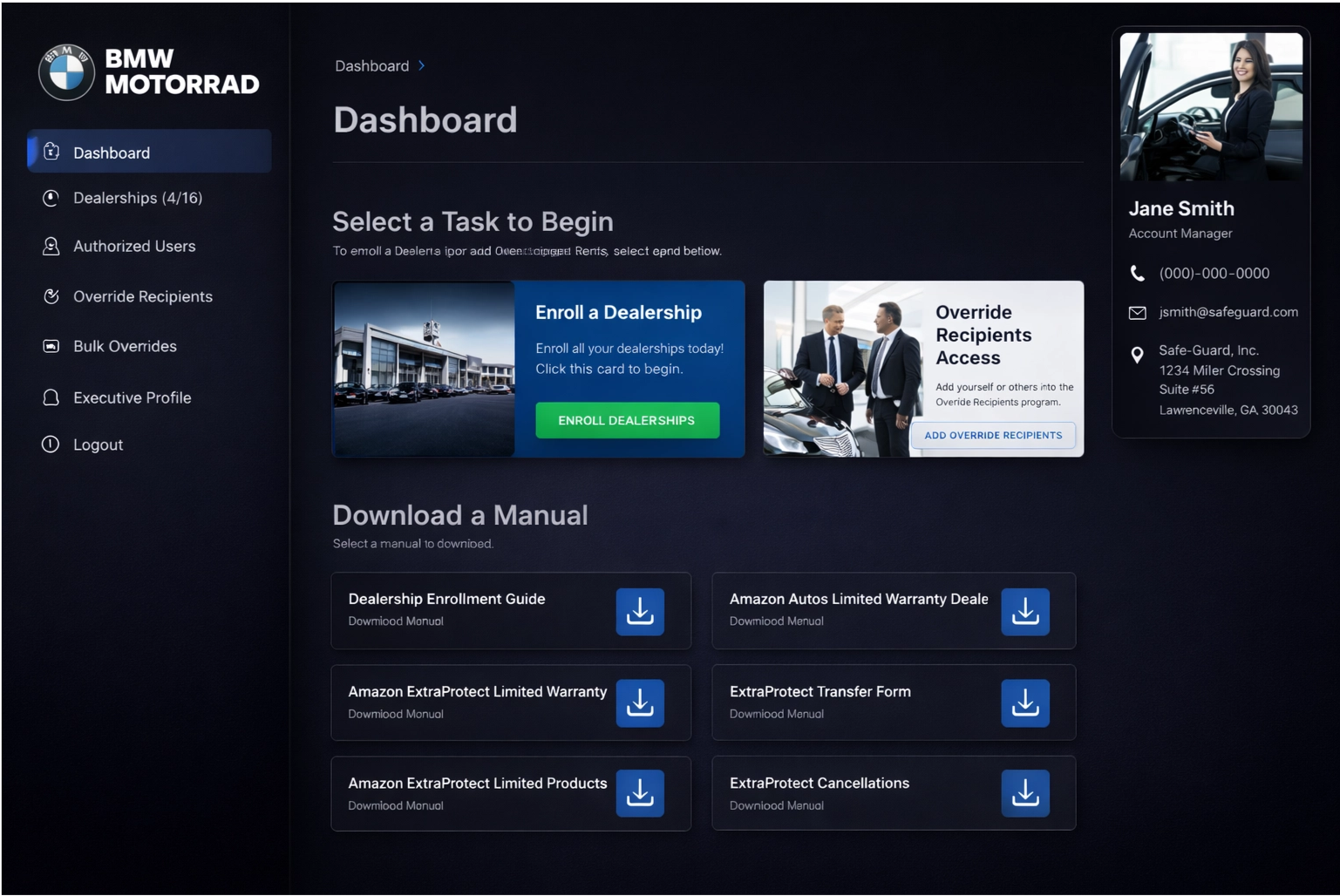
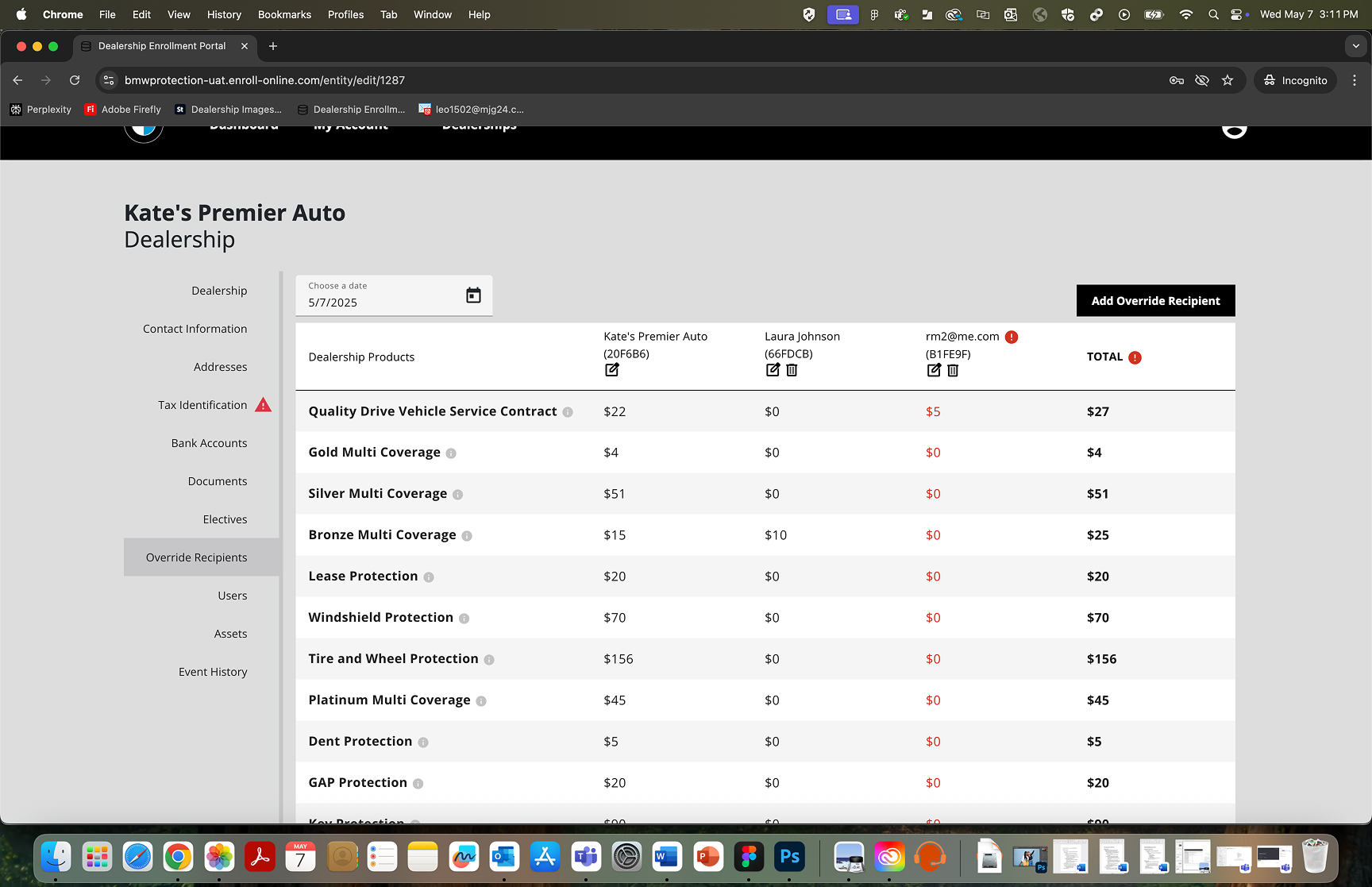
Product owners urgently needed a functional DMP solution after the first UX designer's 3-4 months of zero progress stalled the project. Despite my approved modern redesign concepts, the dev manager couldn't code them in time for executive deadlines, forcing a pivot to legacy-template updates incorporating those redesign concepts—under tight initial oversight and a January 2026 freeze.

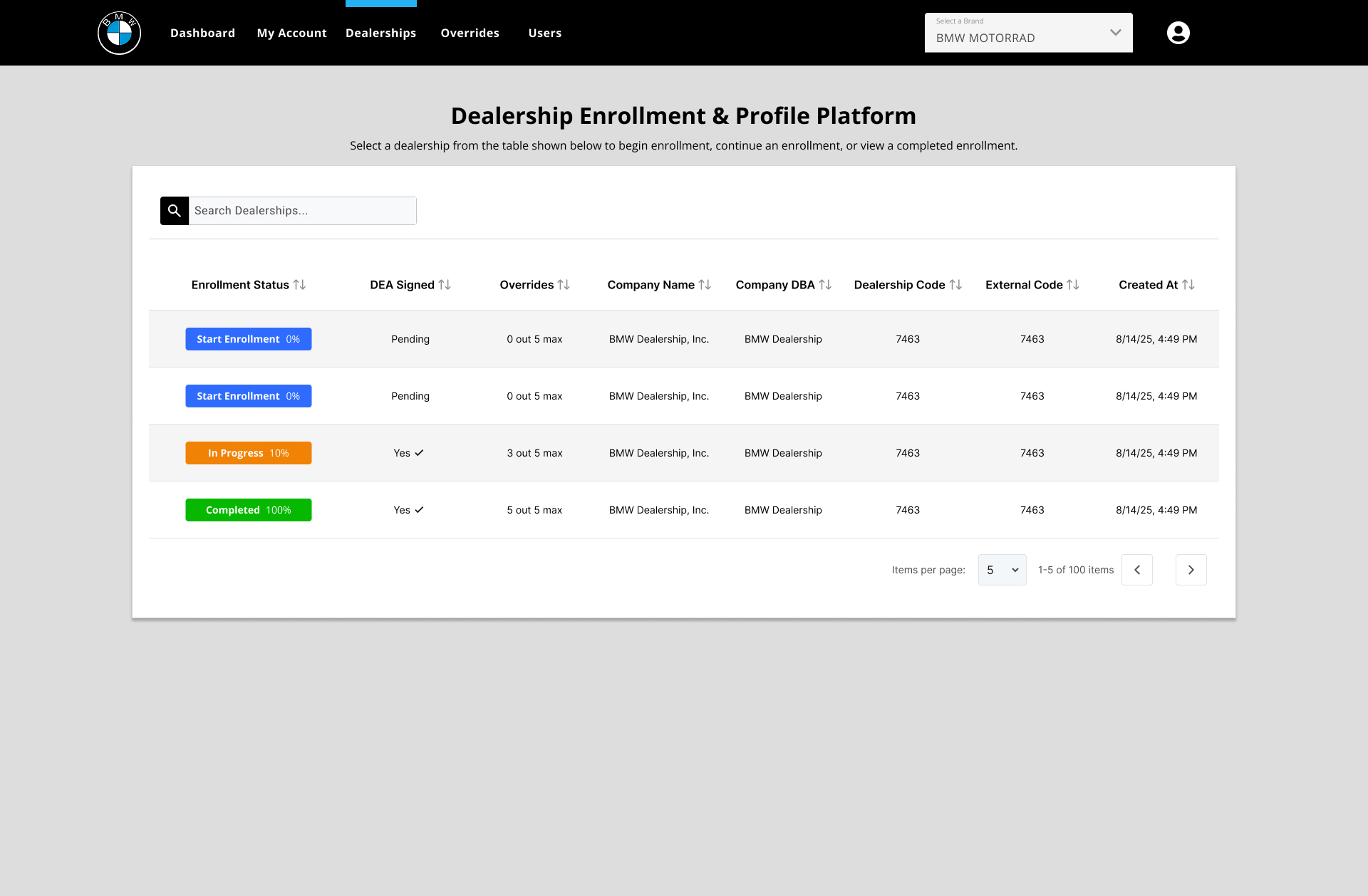
Providers found the legacy DMP application difficult to navigate, unintuitive in its task flow, and overly dependent on guidance or prior training to complete submissions correctly.
The system lacked streamlined submission workflows, clear status visibility, and efficient document management tools, leading to frequent errors, resubmissions, and administrative delays.
The interface appeared outdated and inconsistent with Safe Guard’s modern digital standards, reducing user confidence and perceived system reliability.
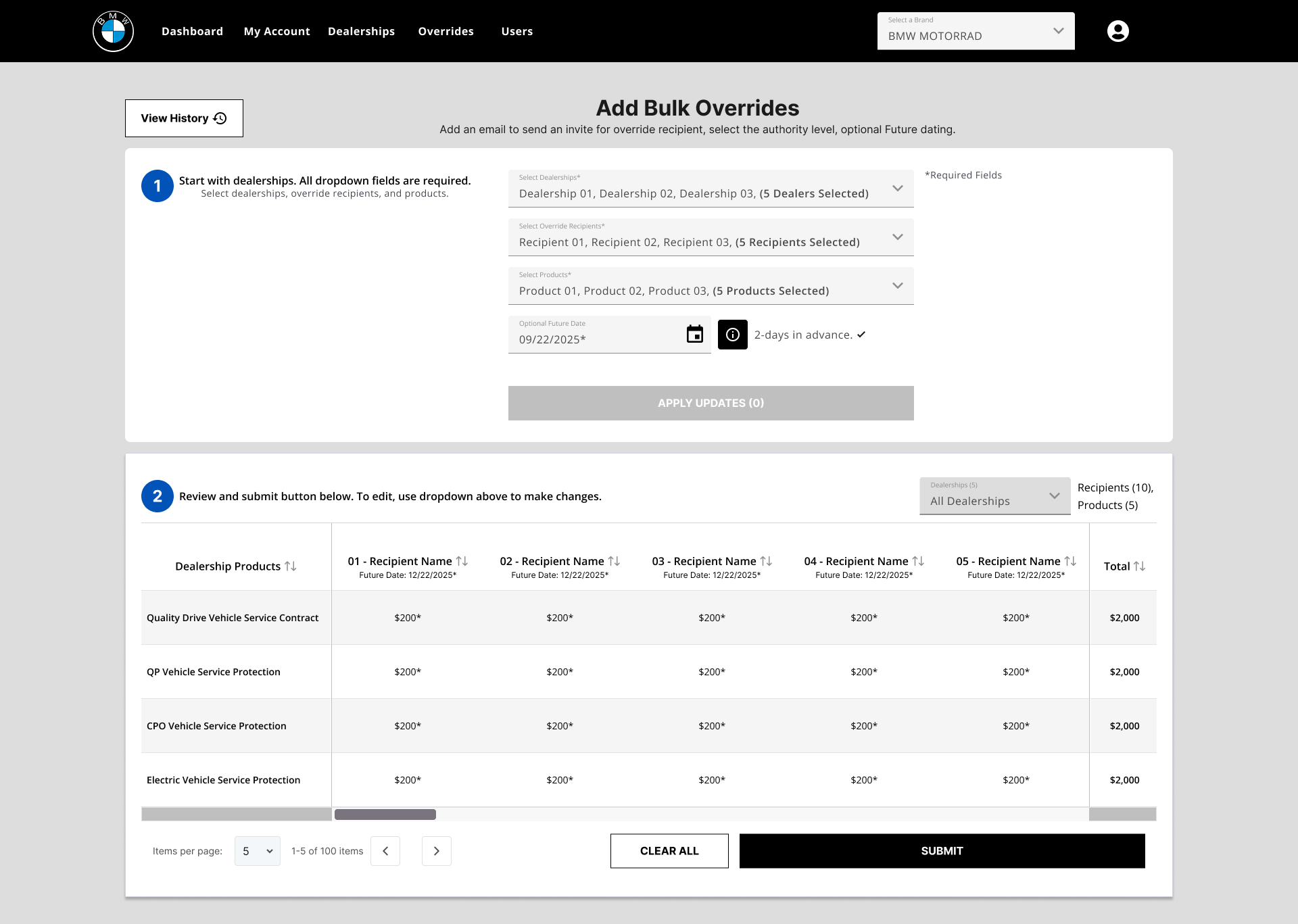
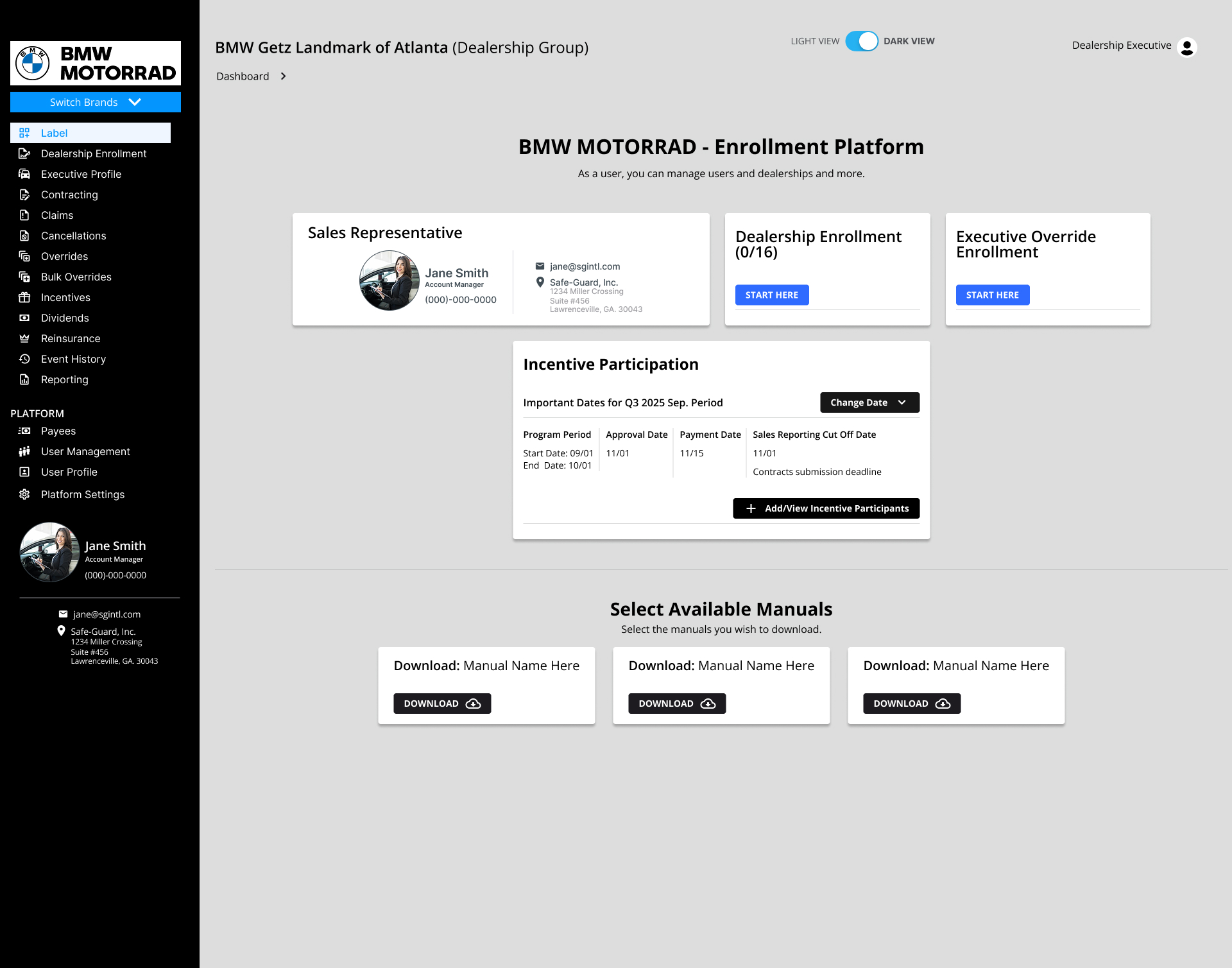
Enable dealership Finance and Insurance (F&I) teams to independently manage Safe-Guard protection products—from contract registration to claims—eliminating constant sales team hand-holding that diverted reps from selling to tech support. Originally planned as a complete redesign, they pivoted to legacy-compatible updates for faster rollout ahead of the January 2026 deadline.
Cut reliance on sales reps for demos and updates, freeing them to focus on selling warranties, GAP, and tire protection.
Deliver intuitive tools for registration, status tracking, and reporting to accelerate F&I operations without added support burden.
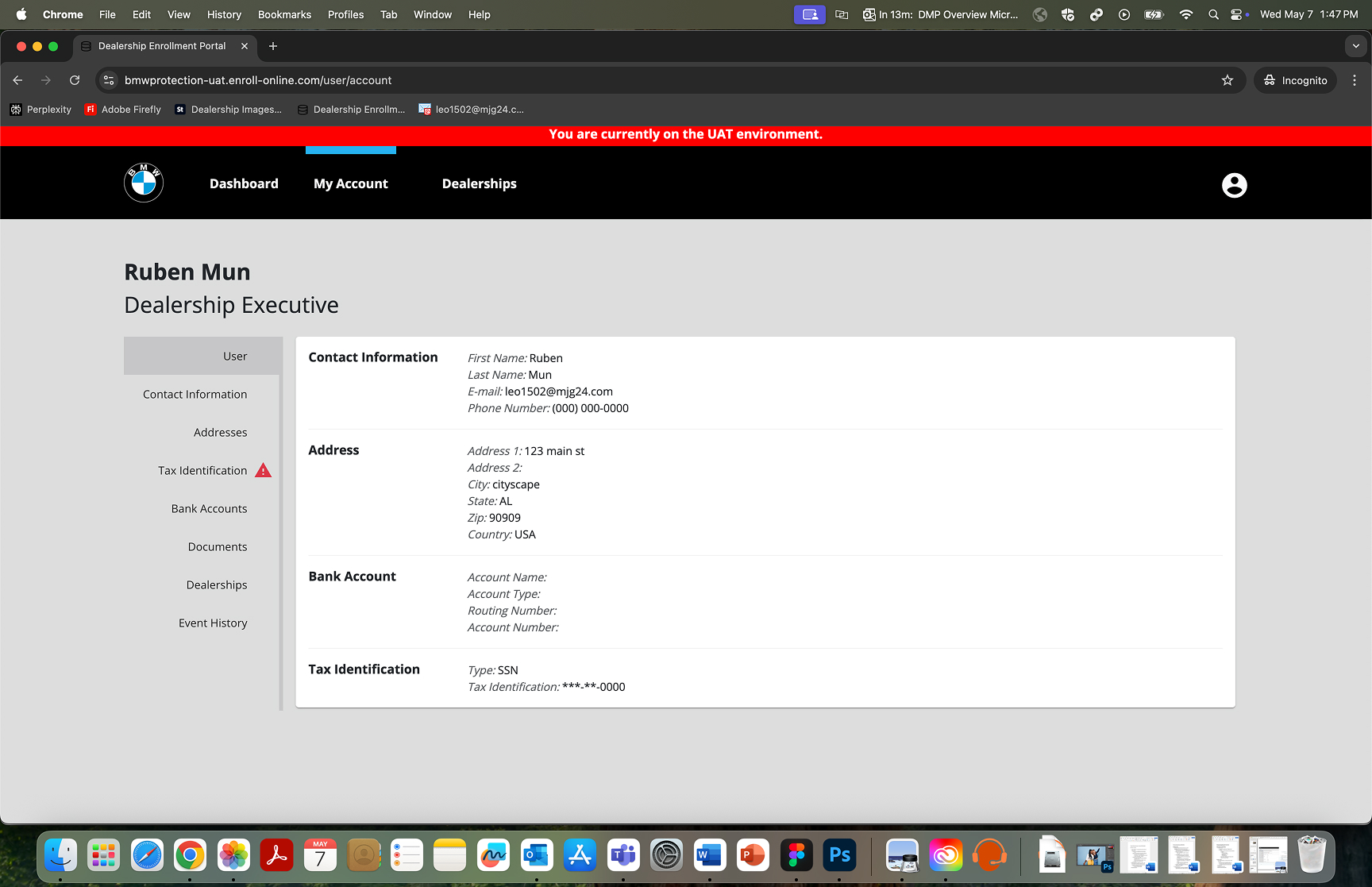
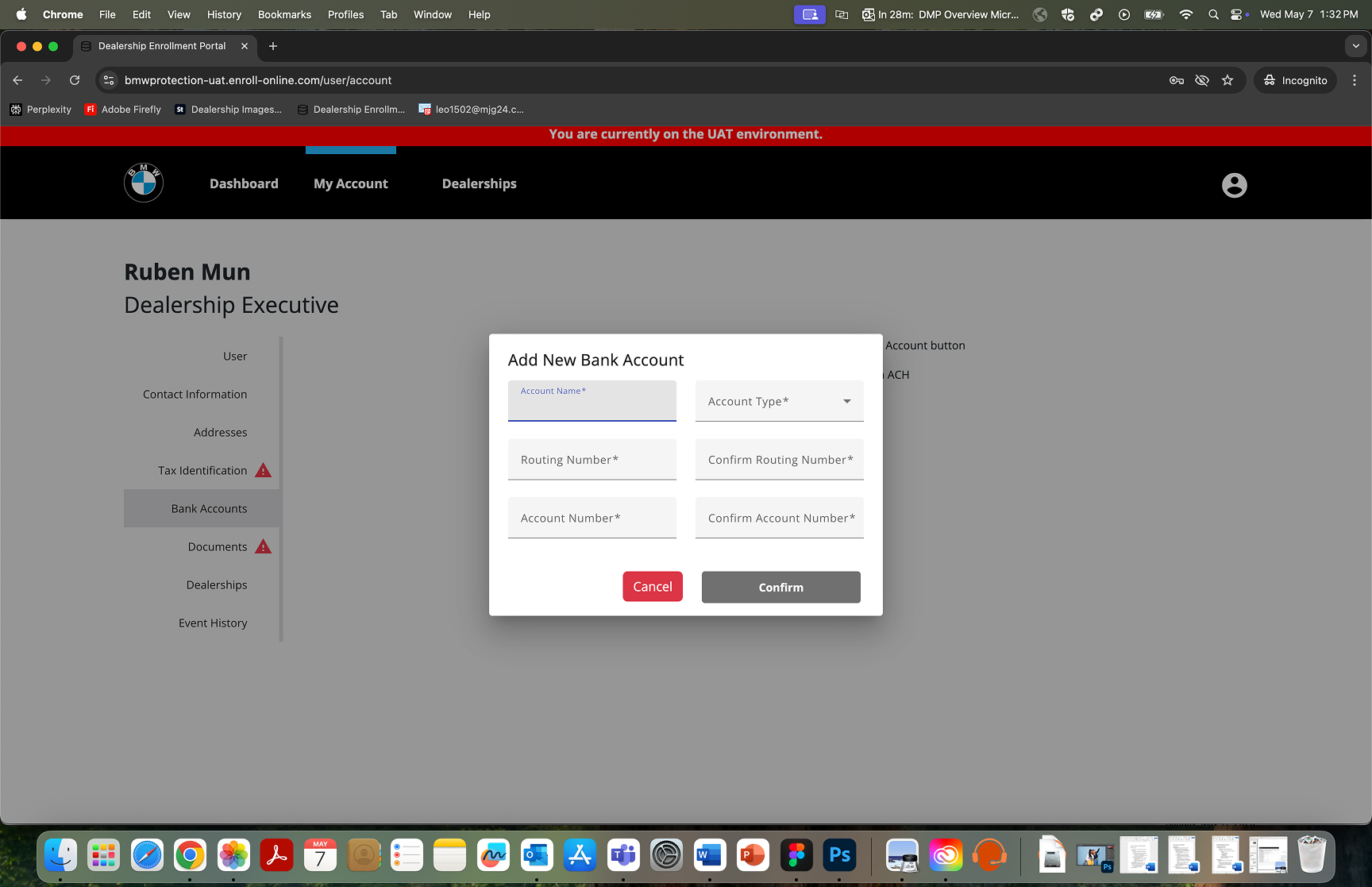
Incorporate approved modern concepts into existing legacy template, minimizing dev effort for on-time executive freeze delivery.
Taking details notes - using them for further questions with the Product Owners.
I engage with the product owner to gain deeper insights into the product’s challenges.
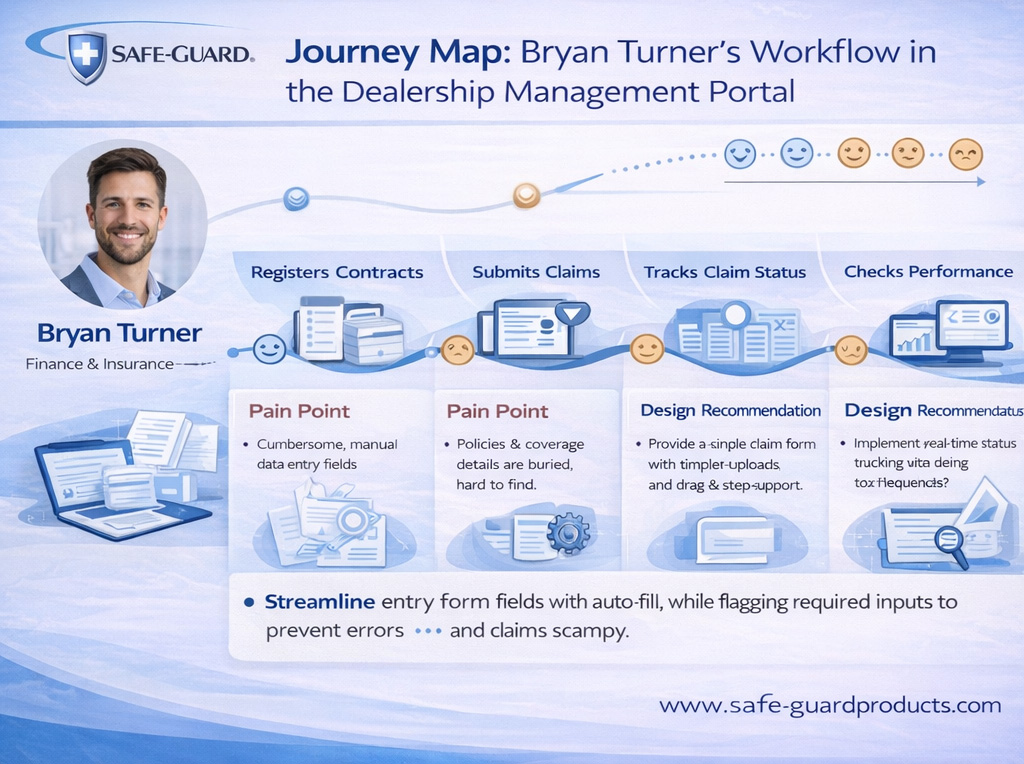
It helps to organize and clarify the path that users will take, making it easier to identify and address any potential friction points.
I review the analytics looking for bounce rate, most visited pages, time on pages, etc.
I ask for any past research, which can give me insights, an overview on past issues, and see if the designs were updated correctly to solve the problems.
Our team decided to conduct interviews to better understand user behavior and aim for informed design decisions that enhance usability satisfaction.
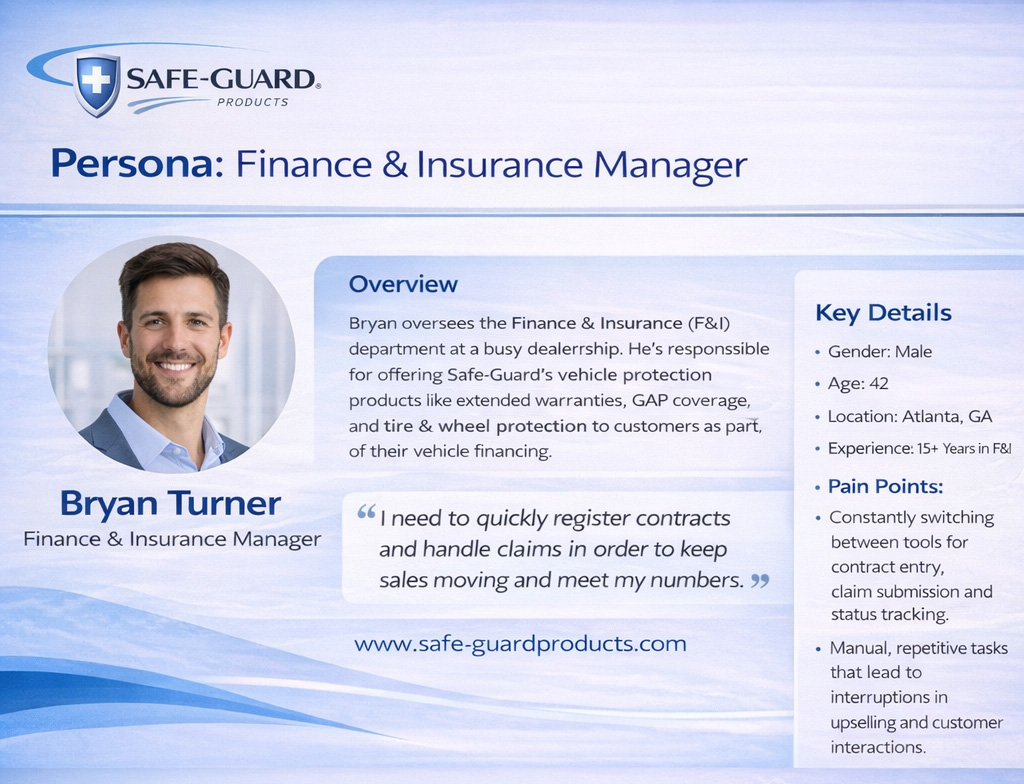
Taking detailed notes, categorizing them - using them for further questions with the team and Product Owners and producing personas, journey maps, and gathering key insights gave clear direction.
Key insights gleaned from interviews indicated that clients favored a straightforward system characterized by proactive problem solving.
The primary pain points revolved around their reluctance to engage with the complex systems, as they desired assurance that their proof of service statements would be submitted correctly.
The journey map revealed critical touchpoints and pain points experienced by users throughout the areas for improvement in document submissions.
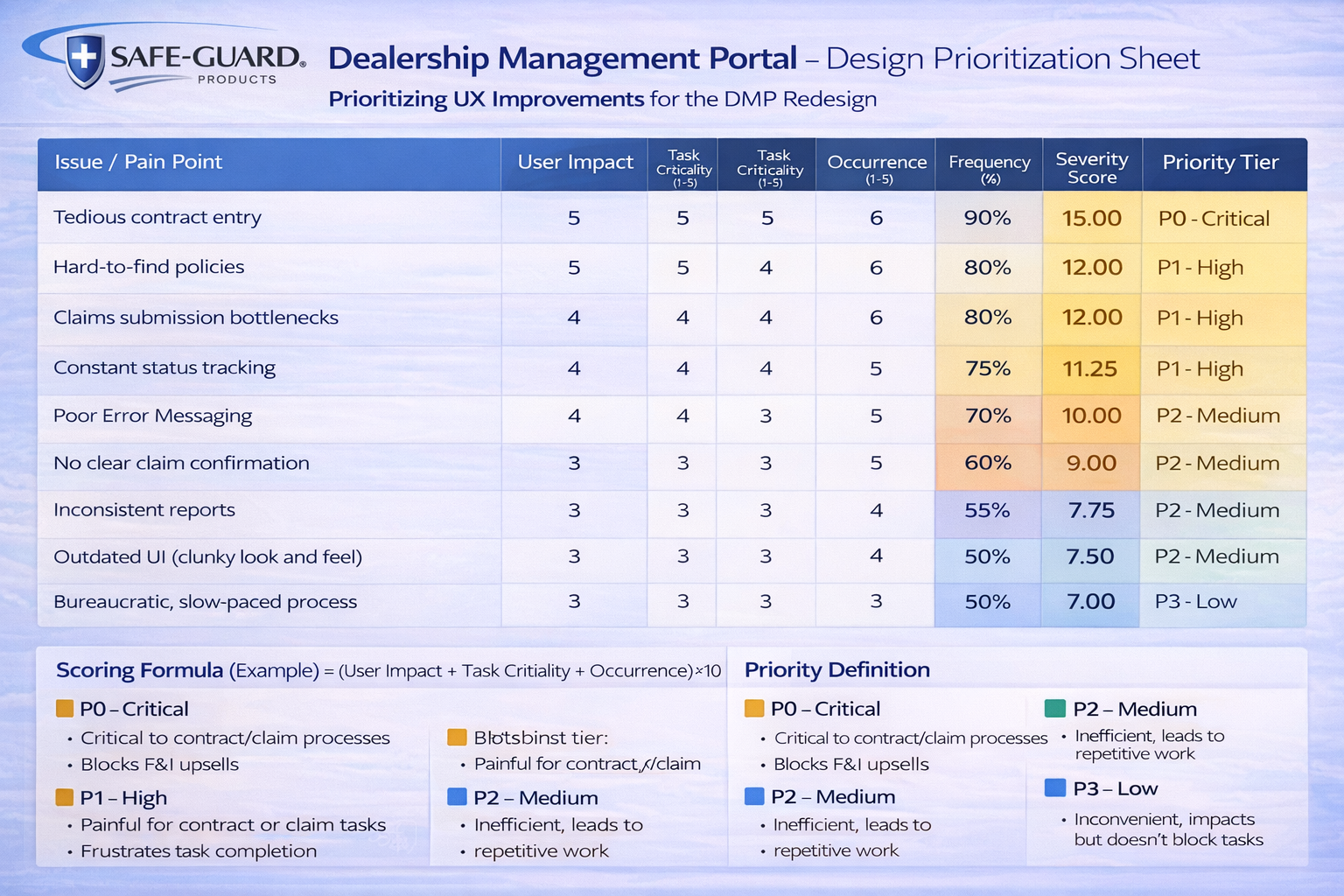
I organized the list of redesigns with the team and product owners. I created a design prioritization sheet of work to be done.
I analyze competitors' strategies, strengths, weaknesses, and designs to glean insights into market trends and user expectations.
I draw inspiration from various sources, including industry trends and innovative solutions, to fuel my creative process and inform the design direction.
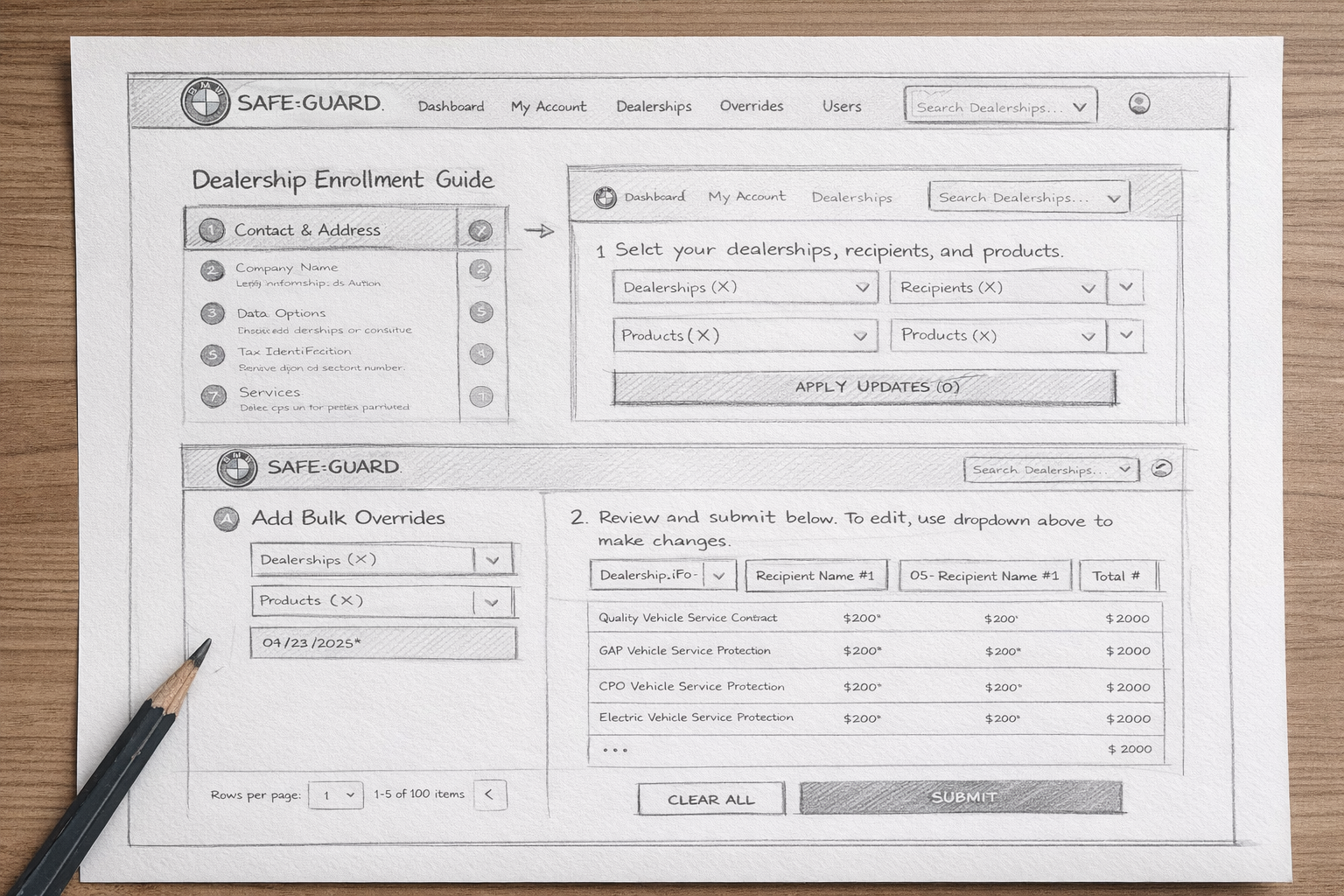
I express my concepts and ideas by sketching them out with pen and paper, allowing for rapid exploration and iteration of design possibilities.
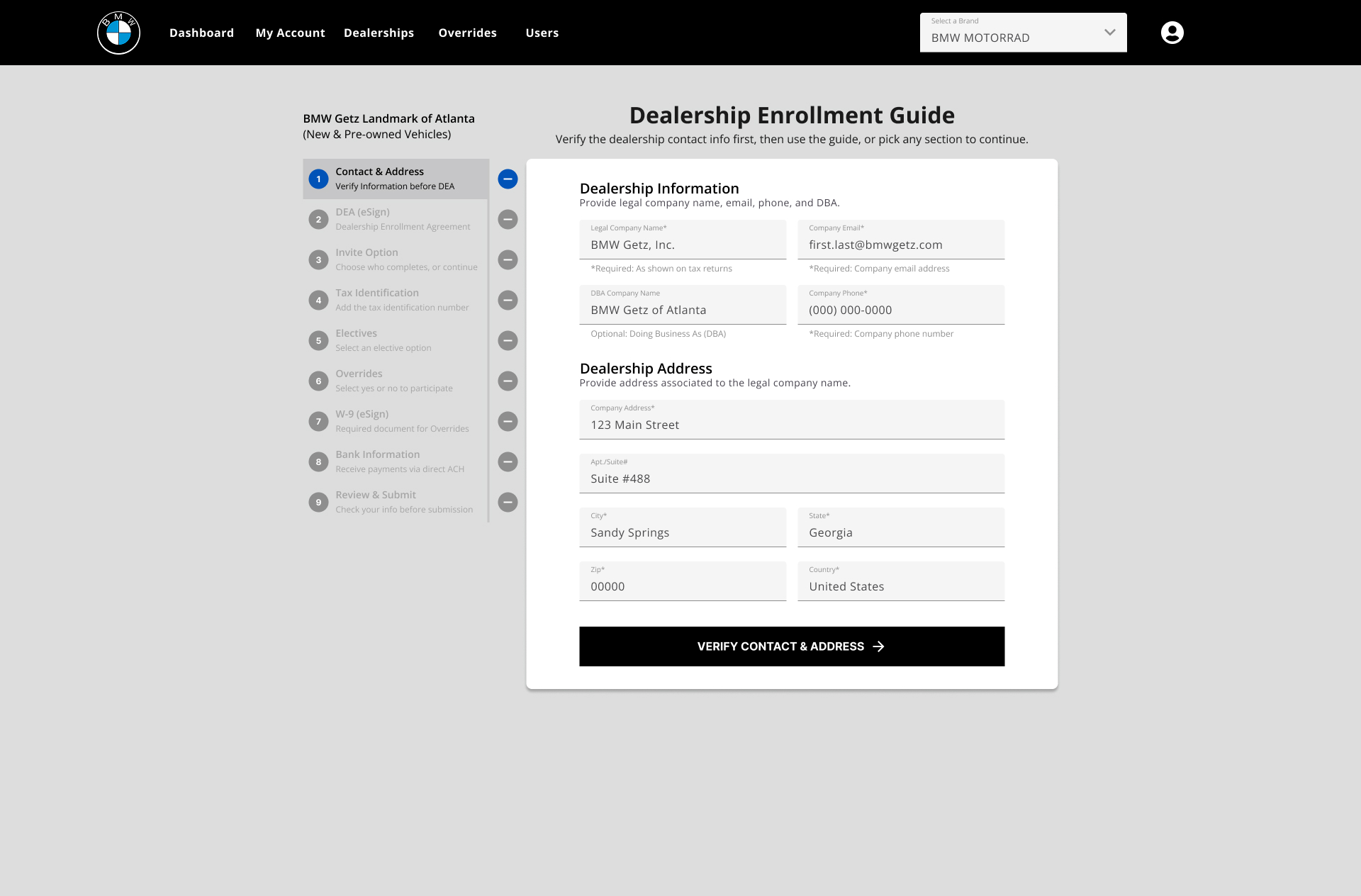
By leveraging Safe Guard's Design System, I save time and bypass wireframing, ensuring that my conceptual designs adhere to brand guidelines. This facilitates user testing while maintaining UI consistency.
I conduct comprehensive user testing sessions, gathering feedback from both internal team members and targeted clients, to refine the design through iterative improvements.
Upon finalizing the design, I organize and prepare the assets for seamless handoff to the development team, ensuring clear communication and smooth implementation of the design vision.
Previous designer delivered nothing in 5 months, burning through planned timeline and creating panic.
Halted approved modern redesign; pivoted to legacy updates when dev couldn't meet full rebuild deadline.
Delivered complete solution before January 2026 executive freeze despite compressed schedule.
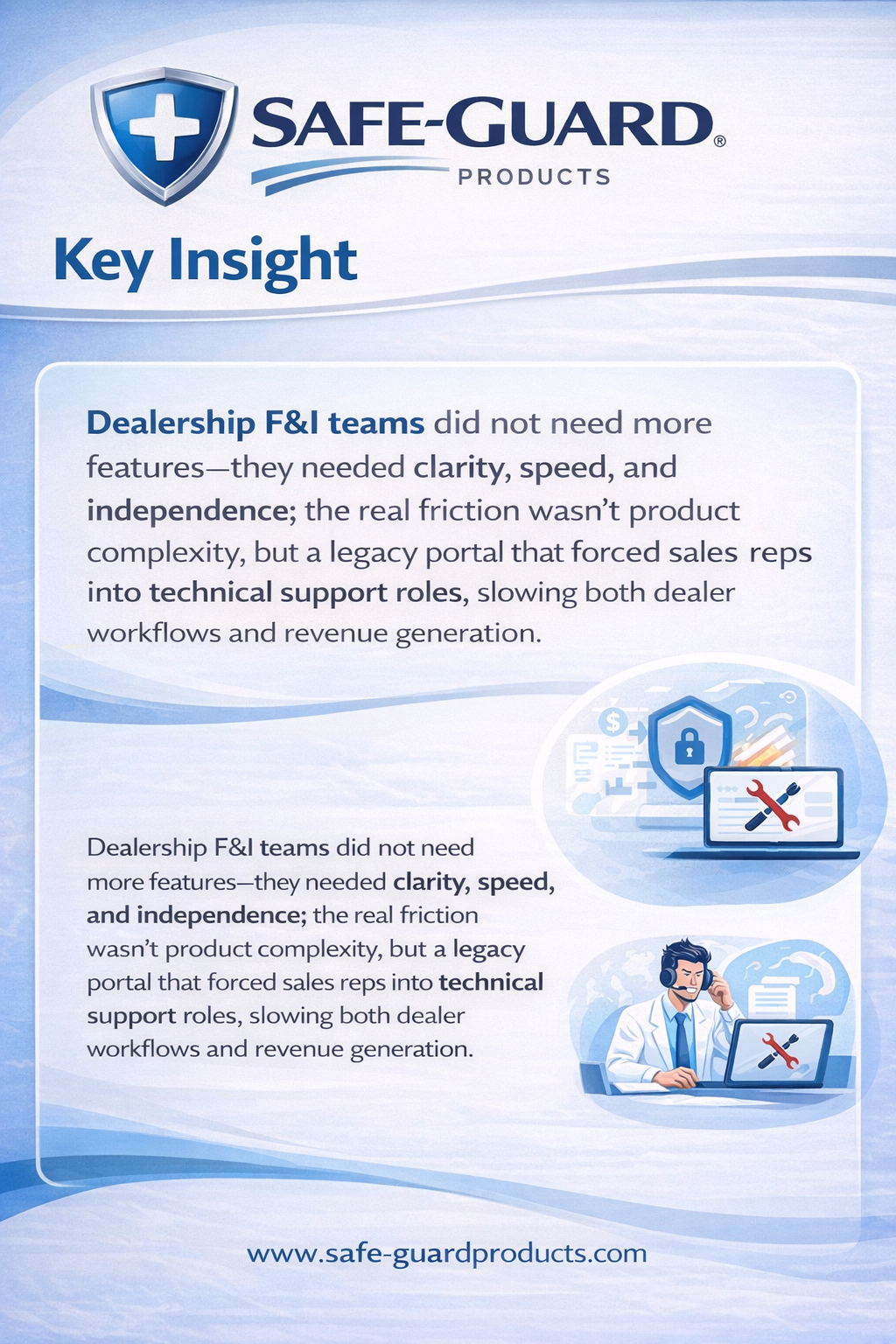
Dealerships relied on sales reps as "help desk"—core goal was F&I independence.
Prototype Early, Pivot Smart: Initial modern redesign concepts provided reusable assets for the legacy pivot, saving weeks of rework.
Timeline Recovery is Possible: After a 5-month stall from the previous designer, I delivered an approved full redesign—then pivoted in the final 3 months to integrate those concepts into the legacy app.
Unified Goals Trump Perfection: Focusing on core F&I independence over full redesign aligned business needs with technical reality.
Visual Demos Build Confidence: Showing before/after workflows convinced execs and devs faster than specs or meetings.
Legacy Constraints Breed Innovation: Working within existing templates forced smarter, more efficient UX solutions than blank-slate builds.
The projected subscriber growth is a testament to the effectiveness of the redesign and the value it brings to the users. It's a clear indicator that investing in UX design can lead to tangible business benefits and enhanced customer satisfaction.